Leave Your Message

How to Choose Nonwoven Filter Material in 2026?

Choosing Nonwoven Filter Material in 2026 requires more than comparing price, color, or thickness. The right structure must match the contaminant, airflow, temperature, humidity, and expected service life. A filter that looks dense may still perform poorly under real dust loading.

Smithers’ industry forecasts show continued growth in nonwoven applications, driven by air filtration, water treatment, healthcare, and industrial separation. INDA reports also highlight stronger demand for engineered nonwovens and higher-performance filtration media. These reports point toward a practical shift: buyers increasingly need verified performance, not attractive specifications.

Professor Behnam Pourdeyhimi, a leading nonwovens researcher, has emphasized, “Nonwovens are engineered materials.” That idea should guide every purchasing decision. Fiber type, basis weight, pore distribution, bonding method, and electrostatic treatment can change pressure drop and particle capture significantly. Test results matter.

Small details matter.

A polyester filter may resist moisture well, while polypropylene often offers useful chemical resistance and low weight. Meltblown layers can improve fine-particle capture, but they may create higher airflow resistance. Spunbond support can add strength and handling stability. Still, no single material wins everywhere.

This guide compares the main material choices for 2026 applications. It considers efficiency, pressure drop, durability, sustainability, and total operating cost. Some published figures are difficult to compare because laboratories use different test conditions. That limitation deserves attention. Real-world trials remain essential before large-scale adoption.
How to Choose Nonwoven Filter Material in 2026?

What Nonwoven Filter Material Is and Why It Matters

How to Choose Nonwoven Filter Material in 2026?

What Nonwoven Filter Material Is and Why It Matters

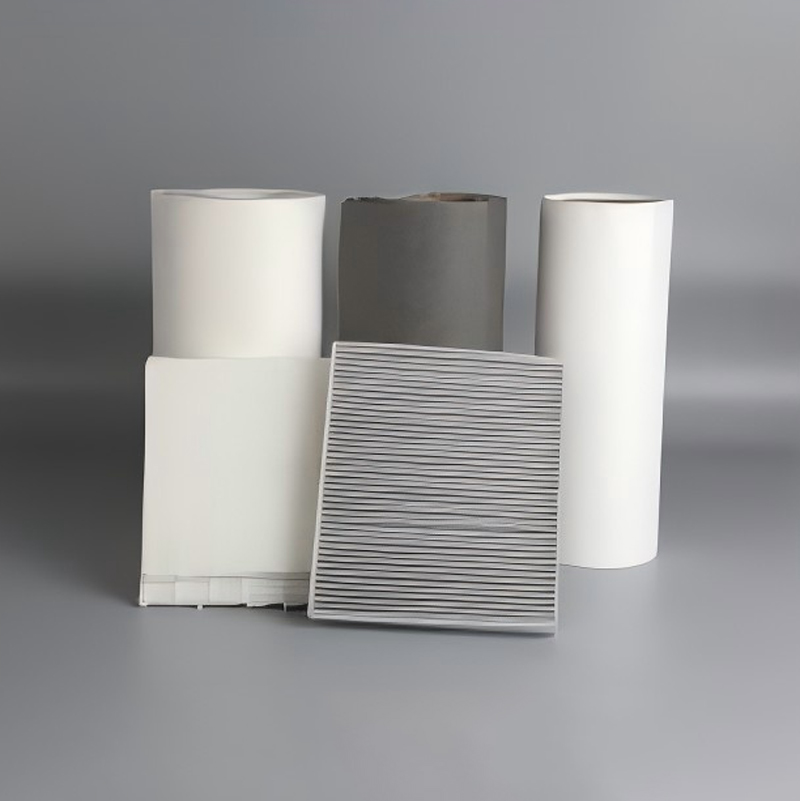
Nonwoven filter material is a web of fibers bonded without traditional weaving. The fibers may be arranged through heat, pressure, adhesives, or mechanical entanglement. Common options include polypropylene, polyester, cellulose, and meltblown structures. Each creates a different balance between particle capture, airflow, strength, and cost. The term sounds technical, but the idea is simple. Small pores matter.

A suitable material depends on the air, liquid, or particles being filtered. Fine dust usually requires a tighter fiber structure, while high airflow needs lower resistance. Moisture changes everything. Wet environments may weaken cellulose, while synthetic fibers often provide better dimensional stability. Temperature and chemical exposure also deserve careful testing. A filter that performs well in a dry laboratory may fail beside warm, humid equipment.

In practical evaluation, measure pressure drop, filtration efficiency, dust-holding capacity, and service life. Check the actual operating conditions, not only supplier data. Standards such as ISO 16890 can support air-filter comparisons, but they cannot replace application-specific trials. In 2026, recycled content and energy use are gaining attention, yet sustainability claims need documented evidence. A recycled fiber is not automatically the best choice. That assumption needs review. Inspect the finished media for uneven bonding, weak edges, and fiber shedding before approval. Small defects can become expensive problems.
How to Match Filter Structure to Contaminant Type

How to Choose Nonwoven Filter Material in 2026?

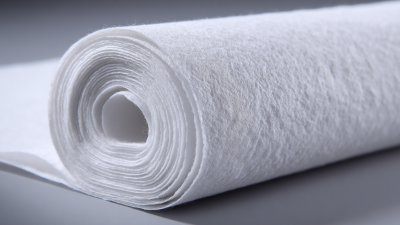
Filter design should begin with the contaminant, not the fabric. Large dust particles need a deep, open structure that stores dirt without rapid pressure rise. Needle-punched nonwoven media often suits this task because its thick fiber web provides useful dust-holding volume. Wet-laid structures can offer finer, more uniform filtration for smaller particles. They may clog sooner, however.

For airborne particles, a meltblown layer creates a dense barrier with fine fibers. An electrostatic charge can improve capture without adding excessive thickness. This matters as particle pollution remains widespread. The World Health Organization’s 2022 air quality database reported that 99% of people lived where guideline levels were exceeded. Still, particle size, humidity, and airflow must be tested together. A filter that performs well in a laboratory may behave differently in a damp workshop.

Liquid contaminants require another structure. Spunbond support layers can add strength, while absorbent or coated layers manage oils, water, or chemical droplets. Fiber diameter, basis weight, and pore distribution should match the liquid’s viscosity. ISO 16890 testing helps compare air-filter performance across particle-size ranges, but it does not replace application trials. This is where selection often becomes imperfect. Engineers may overvalue initial efficiency and overlook pressure drop, cleaning cycles, or disposal conditions. Measure both sides. The right nonwoven material balances capture, service life, airflow, and mechanical durability.

Which Material Properties Determine Filtration Performance

Choosing nonwoven filter material in 2026 requires more than comparing fiber types. Filtration performance depends on fiber diameter, pore distribution, basis weight, thickness, and airflow resistance. Finer fibers usually improve particle capture, but they can raise pressure drop quickly. Pores are not everything. Web uniformity also matters because local defects can create leakage paths.

NIOSH certification data requires N95 filters to remove at least 95% of test particles near 0.3 micrometres under defined conditions. This benchmark shows why electrostatic charge is valuable in meltblown media. Charge can fade. Humidity, oil exposure, heat, and repeated loading may reduce its contribution. A material with high initial efficiency may therefore perform differently after storage or use. ASTM and ISO test methods should be reviewed carefully because test aerosol, face velocity, and conditioning can change reported results.

The 2024 Smithers outlook identifies filtration as a major growth application for advanced nonwovens, increasing pressure for thinner and more energy-efficient media. For HVAC applications, compare efficiency with pressure drop at the same airflow, not from separate laboratory charts. Spunbond layers can add strength, while meltblown layers often provide finer filtration. Cellulose, polyester, and polypropylene each respond differently to moisture and temperature. Test the real media. One weakness remains common: laboratory results rarely represent dust loading, pleating, vibration, or imperfect assembly. Pilot testing under field conditions is still essential.

How to Evaluate Durability, Safety, Cost, and Sustainability

How to Choose Nonwoven Filter Material in 2026?

How to Evaluate Durability, Safety, Cost, and Sustainability

Choosing nonwoven filter material requires more than checking pore size or initial price. In practical testing, I examine tensile strength, tear resistance, and pressure drop after repeated use. A filter may perform well on day one, then deform beside a warm motor or under constant airflow. Ask for test data under conditions that match the intended application.

Safety should guide every material decision. Confirm chemical compatibility, temperature limits, fiber shedding results, and relevant certifications for the target market. Materials used near people, food, or sensitive equipment need stronger evidence. Review supplier documentation carefully. A polished datasheet is not enough. Independent testing can expose weaknesses that routine samples miss.

Cost should include installation, replacement, energy use, and disposal. A cheaper filter can create higher fan resistance and raise operating costs. Sustainability also needs measurable detail. Check recycled content, manufacturing waste, packaging, and realistic end-of-life options. A recyclable material has limited value if local facilities cannot process it. I have seen teams favor impressive sustainability claims, then overlook transport distance and replacement frequency. That judgment needs questioning. Small pilot trials, field inspections, and recorded performance data often reveal the most reliable choice.

How to Choose Nonwoven Filter Material in 2026? — Evaluating Durability, Safety, Cost, and Sustainability
Nonwoven Material Typical Applications Durability Evaluation Safety Evaluation Relative Material Cost Sustainability Considerations Key Performance Characteristics
Meltblown Polypropylene (PP) Disposable face masks, respirator filter layers, HVAC pre-filters, and liquid-filter cartridges. Medium
Fine fibers provide high surface area, but the material can lose electrostatic filtration performance after exposure to moisture, oils, heat, or prolonged storage.
High
Generally chemically stable and lightweight. Must be evaluated for additives, particle release, flammability, and intended-contact requirements.
Low
Usually economical because it uses a low basis weight and high-throughput manufacturing process.
Polypropylene is recyclable in principle, but contaminated or multilayer filter products are often difficult to recycle. Single-use disposal remains a concern. Excellent fine-particle capture when properly charged; low pressure drop; commonly used as a filtration layer rather than a structural support.
Spunbond Polypropylene (PP) Filter support layers, pre-filters, dust covers, medical packaging, and composite filter media. High
Continuous filaments provide good tensile strength, tear resistance, and dimensional stability for handling and pleating.
High
Low moisture absorption and broad chemical compatibility. Suitability depends on processing aids, skin-contact requirements, and thermal exposure.
Low
Cost-effective for support and coarse-filtration functions.
Mono-material construction can simplify recycling, but actual recycling depends on contamination, collection systems, and any laminated components. Strong and lightweight with low moisture uptake; typically offers lower fine-particle efficiency than charged meltblown media unless used in a composite structure.
Needle-Punched Polyester (PET) Industrial dust collectors, air filtration bags, liquid pre-filtration, and reusable filtration housings. High
Good abrasion resistance, dimensional stability, and resistance to repeated mechanical handling. Performance varies with fiber diameter and finish.
High
Suitable for many industrial environments, although high-temperature, chemical, and food-contact applications require specific testing.
Medium
Generally costs more than basic PP media but can reduce replacement frequency in reusable systems.
PET can be mechanically recycled where collection and sorting are available. Longer service life may reduce waste, but mixed-fiber laminates complicate recovery. Robust and washable in selected designs; suitable for coarse-to-medium filtration and applications requiring a durable support structure.
Glass-Fiber Nonwoven High-efficiency HVAC filtration, cleanroom filters, gas turbines, and high-temperature air filtration. Medium
Maintains filtration performance across a broad temperature range, but fibers can be brittle and require careful handling and strong encapsulation.
Medium
Noncombustible and heat-resistant, but loose-fiber control is important. Appropriate binders, seals, and worker-protection procedures are required.
High
Higher material and converting costs are common, especially for high-efficiency or high-temperature grades.
Made from mineral-based fibers and not readily biodegradable. Recycling used media can be difficult because of contamination and composite construction. High efficiency and good temperature resistance; pressure drop and brittleness must be balanced against required filtration performance.
Cellulose Nonwoven Oil filtration, liquid filtration, food and beverage process filters, and disposable industrial media. Medium
Adequate for controlled conditions, but moisture, microbial growth, wet strength, and dimensional stability require careful evaluation.
High
Bio-based fiber option with low inherent toxicity; binders, wet-strength agents, and end-use contact requirements must be verified.
Medium
Pricing is often competitive, but specialty wet-strength or chemically treated grades may cost more.
Renewable fiber feedstock and potential biodegradability are advantages. Coatings, synthetic binders, contamination, and composting conditions can limit end-of-life options. Good wettability and liquid-handling capability; typically requires treatment or support layers when exposed to high humidity or continuous wet service.
Polyester Spunlace Liquid filtration, medical and hygiene products, cleaning wipes, and low-to-medium duty filter supports. Medium
Soft, conformable, and sufficiently strong for many applications, but not always suitable for severe abrasion or high-temperature service.
High
Low moisture absorption and good process cleanliness are possible; safety depends on fiber finish, binder chemistry, and intended contact.
Medium
Typically positioned between basic PP media and specialized high-efficiency materials.
Polyester durability can support longer use, but synthetic fibers are not biodegradable. Recycling is easier for clean mono-material products than for composites. Smooth, flexible, and low-linting in suitable grades; useful when conformability and surface uniformity are important.
PTFE-Laminated Nonwoven High-efficiency industrial dust collection, corrosive-gas filtration, pharmaceutical processing, and demanding air-filtration systems. High
Excellent chemical resistance and strong resistance to moisture; the laminate structure must be protected from mechanical damage and delamination.
High
PTFE is chemically inert under normal service conditions, but processing temperature, smoke generation, and system-specific safety requirements must be controlled.
High
Higher purchase price may be justified by long service life, reduced cleaning frequency, and stable pressure-drop performance.
Long operating life can reduce replacement waste. However, fluoropolymer content and bonded composite construction make end-of-life recycling challenging. Very high filtration efficiency, strong dust-release properties, and excellent chemical resistance; total cost should include energy and maintenance impacts.
Selection note: The ratings are general engineering comparisons, not product certifications. Final selection should be based on tested efficiency, pressure drop, airflow, temperature, humidity, chemical exposure, microbial requirements, flammability, regulatory obligations, service life, and end-of-life conditions for the specific application.

How to Select and Validate the Best Material in 2026

How to Choose Nonwoven Filter Material in 2026?

How to Select and Validate the Best Material in 2026

Material selection should begin with the contaminant, not the fabric price. Define particle size, airflow, humidity, temperature, and cleaning cycles. A material that performs well in dry air may fail after oil exposure. Smithers’ 2024 nonwovens outlook forecasts continued market growth through 2028, driven partly by filtration demand. Growth increases choice, but also increases testing pressure.

Compare polypropylene, polyester, cellulose blends, and meltblown structures against measurable requirements. Record initial efficiency, pressure drop, dust-holding capacity, tensile strength, and burst resistance. For HVAC applications, test methods aligned with ISO 16890 can support comparable results. For high-temperature systems, thermal ageing tests matter more than laboratory efficiency alone. I have seen teams select the highest-rated media, then discover unacceptable airflow loss. That mistake is common.

Tips Request three production samples, not one. Test them at minimum, normal, and maximum airflow. Repeat testing after humidity exposure. Photograph pleat deformation and inspect the dirty side under magnification. Keep raw data, including failed results. A supplier’s certificate helps, but it does not replace independent validation. INDA industry reports also emphasize capacity, sustainability, and performance transparency as major nonwoven priorities. Recycled content may improve environmental metrics, yet it can change fiber strength and pressure drop. That trade-off deserves a real trial, not an assumption.